
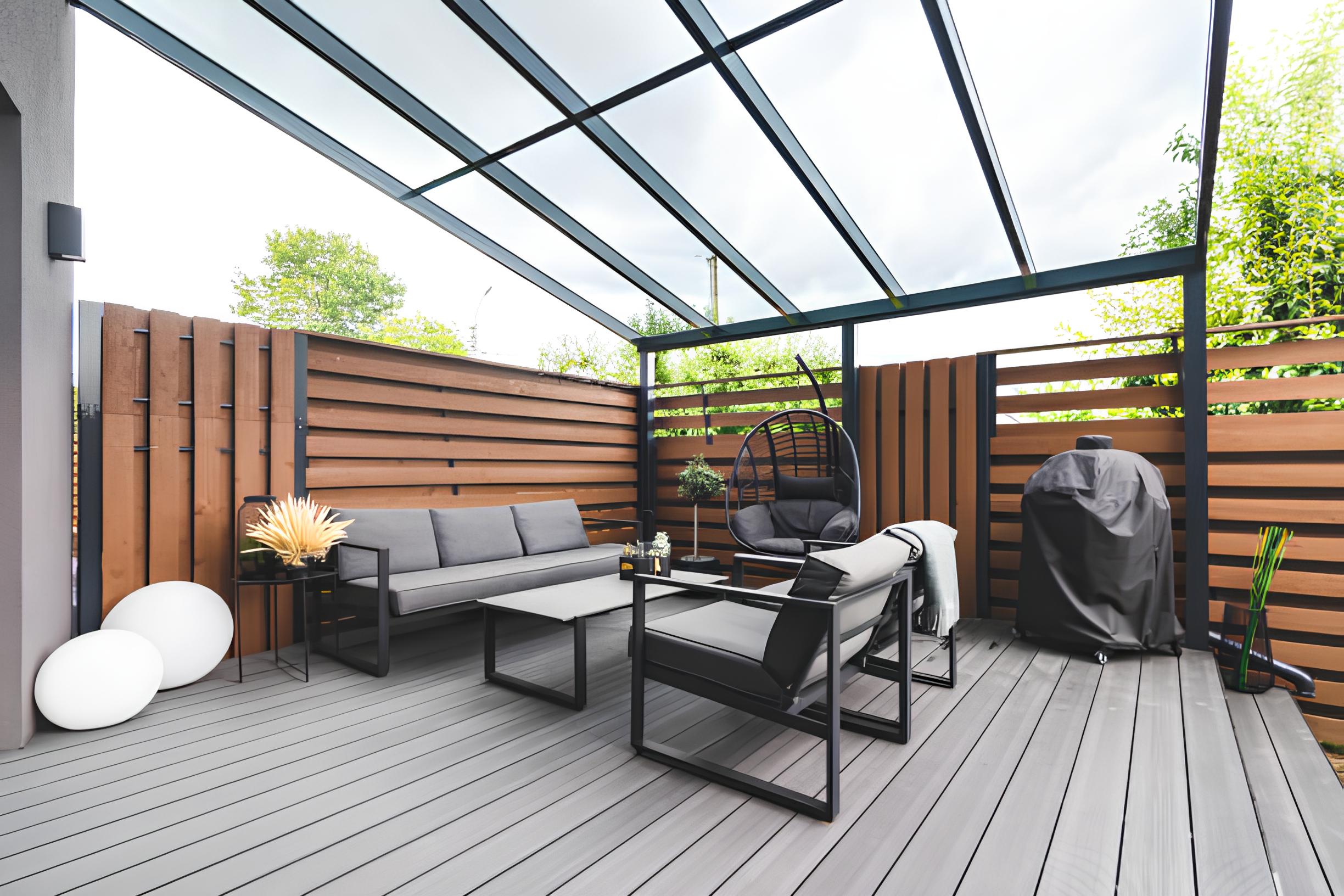
If you are planning a deck build in Centennial, CO or anywhere across the Denver metro area, one of the first and most consequential decisions you will face is the choice between composite decking vs wood decking. Both are popular options, both have genuine strengths, and both have limitations that matter more in some situations than others. Understanding how each material performs in Colorado’s specific climate conditions is the most practical starting point for making a decision you will be happy with for years to come.
How Colorado’s Climate Affects The Composite Decking vs Wood Decking Decision
Colorado is not a forgiving environment for outdoor building materials. The Front Range experiences intense UV radiation at elevation, significant temperature swings between day and night, periodic heavy snow loads, and low humidity conditions that affect how wood behaves over time. Any serious composite decking vs wood decking comparison for Denver-area homeowners needs to account for all of those factors rather than relying on general advice written for milder climates.
Wood decking, particularly softwoods like cedar and redwood, can perform well in Colorado when properly maintained. The lower humidity conditions actually slow some of the moisture-related decay that wood experiences in wetter climates. However, the intense UV exposure at Colorado’s elevation accelerates surface fading and checking in wood surfaces more aggressively than in lower-elevation environments, and the temperature swings cause repeated expansion and contraction cycles that contribute to cracking and warping over time.
Composite decking is engineered to handle UV exposure, temperature variation, and moisture without the surface deterioration that affects natural wood. In the composite decking vs wood decking comparison for Centennial, CO specifically, composite holds a meaningful advantage in terms of long-term appearance retention and resistance to the specific conditions that Colorado weather creates.
Maintenance: Where Composite Decking vs Wood Decking Diverges Most Sharply
For many Denver-area homeowners, the maintenance difference between composite decking vs wood decking is the deciding factor. A natural wood deck in Colorado requires regular attention to stay in good condition. Sealing and staining every one to three years is necessary to protect against UV damage and moisture infiltration, and surface boards that crack or check need to be addressed before moisture gets into the cracks and accelerates deterioration from the inside.
Composite decking requires significantly less ongoing maintenance. The surface is designed to resist fading, staining, and surface wear without annual treatment, and most composite products available today hold their appearance through Colorado’s demanding conditions with minimal intervention from the homeowner. For busy households in Centennial, CO who want to use their deck rather than spend time maintaining it, composite is the more practical choice in the composite decking vs wood decking comparison.
Appearance And Natural Character
The composite decking vs wood decking conversation around aesthetics has shifted considerably as composite products have improved. Early composite decking had a distinctly artificial appearance that was easy to distinguish from natural wood. Modern composite products from manufacturers including Trex, Fiberon, TimberTech by Azek, Deckorators, Duralife, and Moisture Shield replicate the grain, texture, and color variation of natural wood with a level of accuracy that makes the distinction much less obvious in a finished installation.
Natural wood still carries a warmth and organic character that some homeowners prefer, particularly when using premium options like cedar, redwood, or exotic hardwoods such as Ipe, Tigerwood, and Cumaru. These species bring a richness and visual depth that composite products approximate but do not fully replicate. For homeowners who prioritize that natural aesthetic and are committed to the maintenance it requires, wood remains a legitimate and attractive choice in the composite decking vs wood decking comparison.
Long-Term Value And Warranty Coverage
When evaluating composite decking vs wood decking from a long-term value perspective, it is worth considering the total cost of ownership rather than just the upfront material cost. Wood decking typically costs less to purchase initially but carries ongoing maintenance costs and a shorter effective lifespan before resurfacing or replacement becomes necessary. Composite decking carries a higher upfront material cost but delivers lower maintenance costs and longer surface life, making the long-term financial picture more favorable than the initial price comparison suggests.
Custom Decks brings 30 years of experience and more than 3,000 completed projects to every composite decking vs wood decking conversation it has with homeowners in Centennial, CO and across the South Denver Metro area. The company is A+ rated on the Better Business Bureau, nationally recognized and award-winning, and backs every deck it builds with a 10-year workmanship warranty. Financing is available for homeowners who want to move forward with a deck project without bearing the full cost upfront, and 3D design services give every client a detailed visual of their finished deck before construction begins.
Talk To Custom Decks About Your Project
If you are working through the composite decking vs wood decking decision for a project in Centennial, CO, Custom Decks is ready to help you think through the options and find the right fit for your property, your lifestyle, and your long-term goals.
Phone: 303-351-3325
Location: Centennial, CO