
Custom Decks Logo

Why Deck Framing Is the Most Important Part of Your Deck

Deck Framing in Centennial, CO | Structural Deck Build Services
Most homeowners spend weeks choosing the perfect decking color, railing style, and layout for their new outdoor space. But the part of the deck you’ll never see after construction is the part that matters most. Deck framing is the structural skeleton that holds everything together, supports every person who steps foot on the surface, and determines how long your deck lasts. Get it right and your deck performs flawlessly for decades. For Lakewood homeowners building at altitude in Colorado’s demanding climate, understanding why deck framing deserves your full attention is the first step toward a build that truly lasts.

What Is Deck Framing?

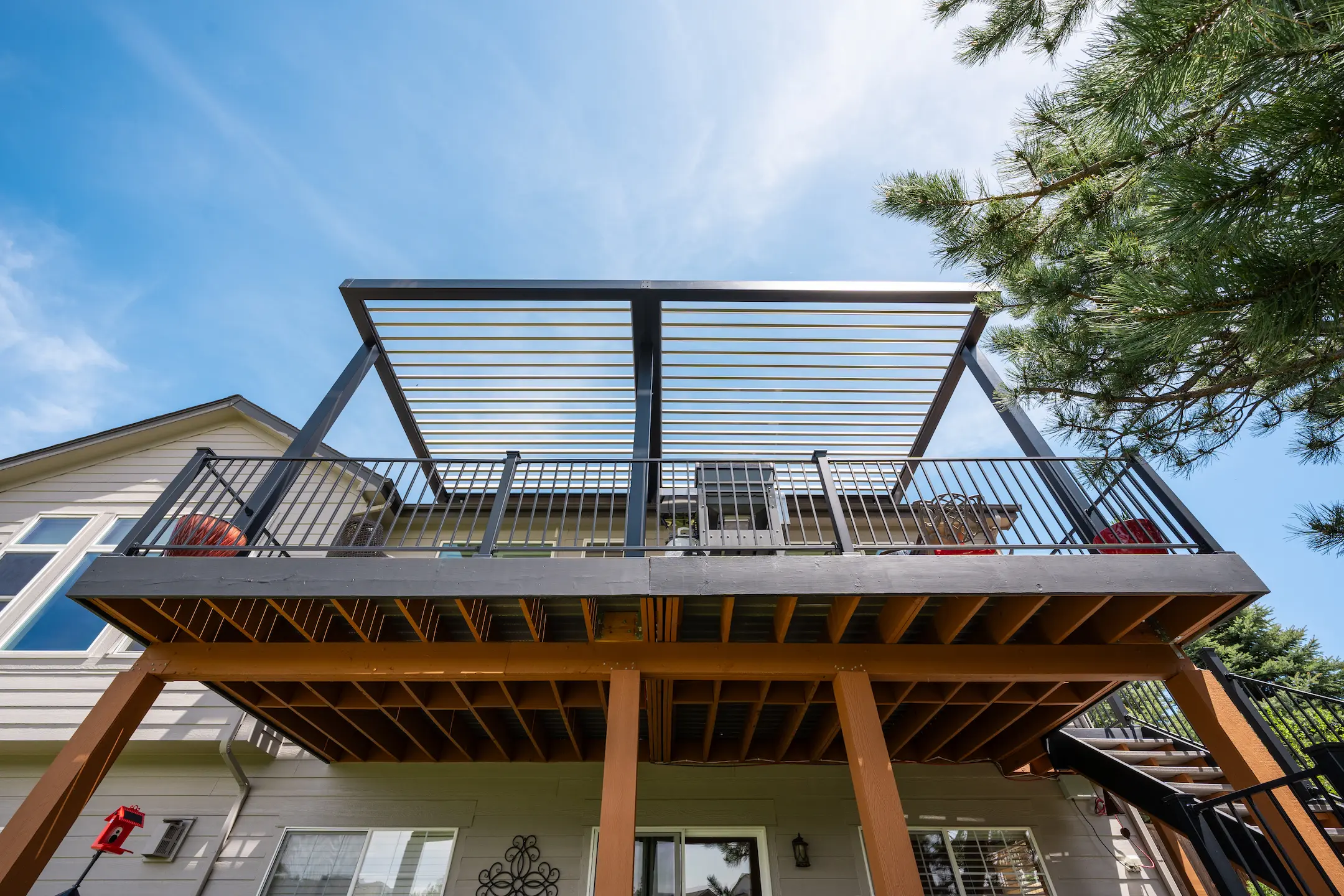
Deck framing is the underlying structural system that supports the visible surface of your deck. It includes the ledger board that attaches the deck to your home, the posts that transfer weight to the ground, the beams that span between posts, and the joists that run across the beams to support the decking boards above. Footings anchored below the frost line complete the system by tying everything to stable ground. Every one of these components works together as a unified structure. If any single element is undersized, improperly installed, or built from the wrong material, the entire system is compromised. That’s why experienced contractors focus on framing first and treat it as the foundation that every other design decision builds upon.

Why It Matters More Than Decking

It’s easy to get excited about surface materials and overlook what’s underneath, but the truth is that beautiful decking installed on poor framing is a disaster waiting to happen. Composite, PVC, and hardwood boards can’t compensate for joists that are spaced too far apart, beams that are undersized, or posts that aren’t properly anchored. Surface materials handle aesthetics and weather resistance. Deck framing handles safety and structural integrity. A well-framed deck feels solid and stable underfoot with no bounce, flex, or movement when you walk across it. A poorly framed deck develops squeaks, soft spots, and visible sagging that only get worse over time. The decking on top may still look fine while the structure beneath is quietly failing, which is what makes framing problems so dangerous.

Material and Brand Options

The material you choose for deck framing affects strength, longevity, and how well the structure handles Colorado’s climate. Standard pressure-treated lumber remains the most common and affordable option, with brands like ProWood, PWT Lumber, and KDAT Lumber offering products rated for structural use and ground contact. Wood framing resists rot and insects effectively but can warp and crack over time, especially at altitude where dry air and UV exposure are intense. Steel framing from Fortress Building Products has gained strong popularity among homeowners who want maximum strength and longevity. It won’t rot, warp, split, or attract insects, and it maintains structural integrity for decades. Composite framing from OC Lumber by Owens Corning offers excellent moisture resistance and dimensional stability, while TimberTech Aluminum provides a lightweight yet incredibly strong alternative. Your contractor should recommend the deck framing material that best matches your deck’s size, load requirements, and exposure to the elements.

How Colorado’s Climate Affects Framing

Lakewood’s climate puts unique stress on deck framing that milder regions simply don’t experience. Intense UV exposure at altitude dries out wood framing faster, leading to checking, splitting, and weakened connections over time. Wide temperature swings cause materials to expand and contract repeatedly, loosening fasteners and stressing joints throughout the year. Heavy snow loads during winter add significant weight that the framing must support safely, and freeze-thaw cycles can shift footings that aren’t set deep enough below the frost line. Proper deck framing in Colorado means engineering every component to handle these forces, from deeper footings and heavier beams to hardware rated for the loads involved. Skipping any of these steps invites problems that show up within just a few winters.

Joist Spacing and Load Capacity

Joist spacing is one of the most critical details in any deck framing plan. Joists that are spaced too far apart create a bouncy, unstable surface that puts stress on the decking above and the beams below. Most residential decks require joists spaced at 16 inches on center, though some decking products and high-traffic applications call for 12-inch spacing for added rigidity. Load capacity goes hand in hand with joist spacing. Your deck framing needs to support not just the weight of the materials themselves but also the live load of people, furniture, grills, hot tubs, and anything else you plan to put on the surface. A qualified contractor calculates these loads before construction begins and sizes every framing member accordingly.

Hardware and Connections

The hardware connecting your framing components is just as important as the lumber or metal itself. Joist hangers, post bases, beam brackets, and ledger board fasteners all play critical roles in keeping the structure tied together under load and through seasonal movement. Using the wrong hardware or skipping connections entirely is one of the most common causes of deck failure. In Colorado, all hardware should be rated for the corrosion conditions present and the loads involved. Stainless steel and hot-dipped galvanized options perform best in high-moisture environments and resist the expansion and contraction cycles that loosen lesser fasteners over time.

Choosing the Right Contractor

Deck framing isn’t the glamorous part of a build, but it’s where the quality of your contractor shows most. A builder who cuts corners on framing might deliver a deck that looks great on day one but develops serious structural issues within a few years. Look for a contractor who takes framing seriously, explains their approach clearly, and builds every structure to meet or exceed local code requirements. At Custom Decks, we treat deck framing as the foundation of every project we build for Lakewood homeowners. Our team engineers every structure to handle Colorado’s altitude, weather, and load demands with precision and care. Call us today at (303) 351-3325 to schedule a consultation and get started.